

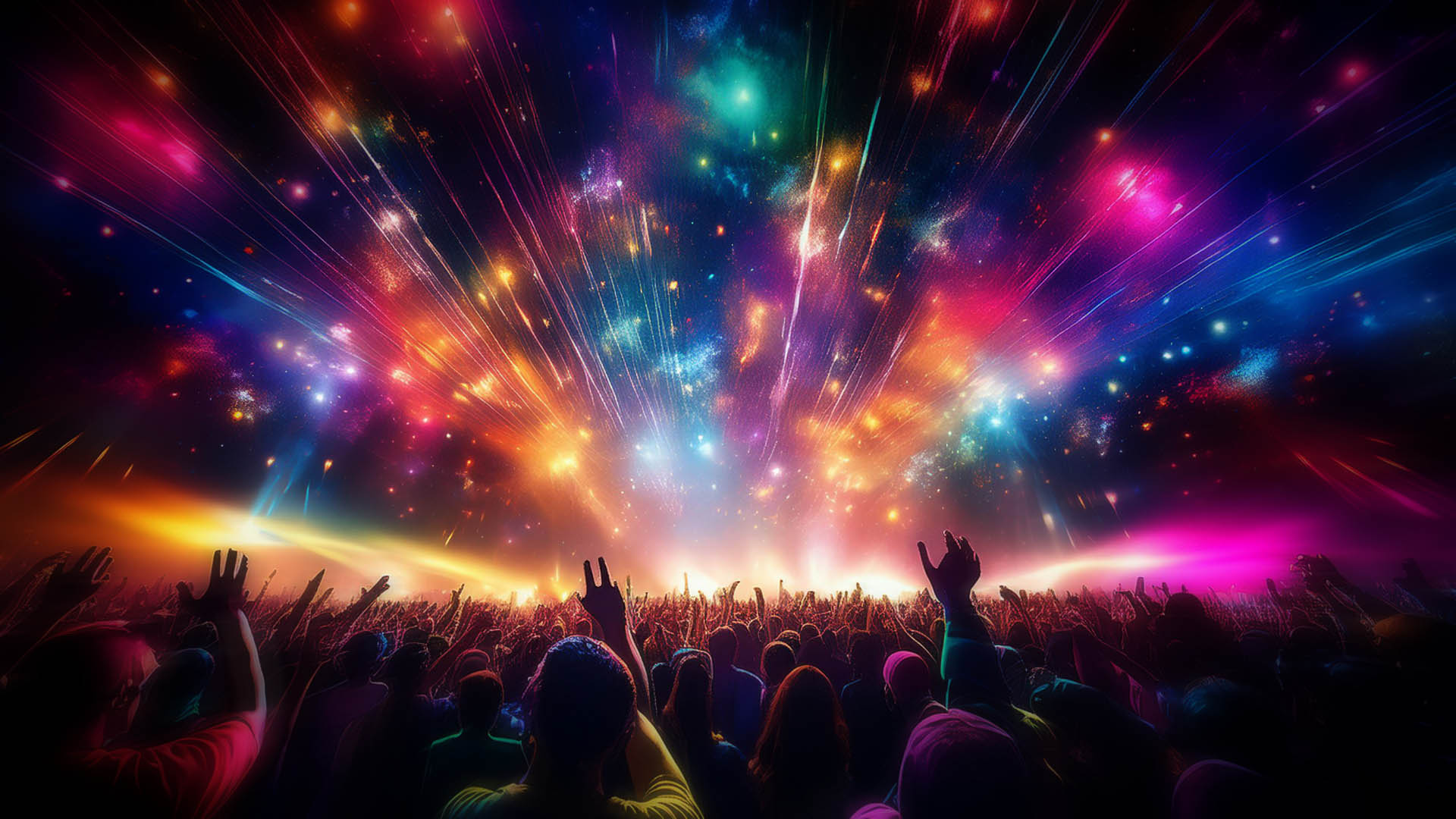
A description of the genre and from where it originated.
Happy Hardcore, also known as UK Hardcore, is a subgenre of electronic dance music characterized by its fast tempo, uplifting melodies, and energetic sound. Emerging in the early 1990s as a progression of the Rave Breaks genre, Happy Hardcore gained commercial success and evolved into a distinct four-to-the-floor style.
For nearly three decades, this genre has been an integral part of international rave culture, cultivating a dedicated fan base. While its popularity has fluctuated over the years, Happy Hardcore continues to thrive, sustained largely by purists who have kept the genre alive amidst the rapidly changing music industry.
A Music Legacy
In the early 1990s, fast-paced dance music surged in popularity, with Happy Hardcore emerging as an accessible, fun, and quirky genre embraced by a generation. Known for its upbeat atmosphere, the genre fostered a positive culture at events, with festivals like Fantazia and Helter Skelter becoming iconic gatherings that showcased the best of the sound.
Artists such as Smart-E’s, led by Luna-C, along with Scooter and The Prodigy, propelled Happy Hardcore into global music charts. Meanwhile, in Europe, figures like Paul Elstak and Dune found success, while in the UK, rising talents like Brisk, Sy, Darren Styles, and Hixxy began shaping their own unique take on Hardcore.
UK Hardcore
Following a decline in popularity, Happy Hardcore experienced a resurgence in the early 2000s with a more polished and sophisticated sound. Now rebranded as UK Hardcore, the genre incorporated vibrant synths and powerful kick drums, creating a dynamic blend that struck a balance between the uplifting energy of Trance and the accessibility of commercial dance music. This evolution allowed UK Hardcore to reach new audiences while maintaining its core fan base.
Hardcore Til I Die emerged as a leading force in the resurgence of UK Hardcore, with Hixxy’s name attached to many of the genre’s most iconic tracks. Darren Styles built on this momentum, releasing a successful album, while Ultrabeat’s collaboration with Clubland brought some rare chart success for the genre. However, as the music industry evolved and became more accessible, newer genres have since overtaken Hardcore in mainstream popularity.
Modern Chapter
Over the past decade, UK Hardcore has experienced a marked decline, struggling to keep pace with evolving music trends. Genres like Hardstyle and newer electronic styles have garnered greater success, while UK Hardcore has struggled to adapt. The closure of key labels such as Hardcore Underground significantly impacted the genre’s output, reducing both the volume and diversity of new releases.
Iconic album series like Bonkers and X-Treme Hardcore ceased production, leaving emerging artists with fewer platforms and a diminished community to support their creative efforts. Despite these challenges, the genre continues to offer fast-paced, vibrant music, though discovering new talent and innovation has become more difficult.
Interestingly, Happy Hardcore has recently resurfaced as a novel element in commercial Drum & Bass tracks, and the rise of harder Dutch styles has inspired more producers to incorporate its sound. Notably, artists like Tiesto have experimented with Happy Hardcore, though without deep involvement in its original community. As a result, the genre’s legacy has grown independently of the scene that initially cultivated it.
Future
There is reason to be optimistic about the future of the genre. Happy Hardcore, with its distinctive sound, still holds a place on the global stage. As it sheds its geographically bound identity as “UK Hardcore,” the genre has the potential to redefine itself within the broader fast-paced EDM spectrum, alongside Hardstyle and Frenchcore.
The genre may be poised for a revival, and its influence could soon be restored. Keep an eye on Happy Hardcore—it’s only a matter of time before a renaissance occurs, bringing fresh energy and renewed attention to this enduring style of music.